Rebecca Clarke achieved what she called “my one little whiff of success” in 1919 when her viola Sonata tied for first place in a competition sponsored by Elizabeth Sprague Coolidge. Clarke lived much of her life in the US, although she was born and educated in Great Britain. Striking for its passion and power, her music spans a range of 20th-century styles including Impressionism, post-Romantic, and neo-Classical. Although she wrote nearly 100 works (including songs, choral works, chamber pieces and music for solo piano), only 20 pieces were published in her lifetime, and by the time of her death in 1979, at age 93, all of these were long out of print.
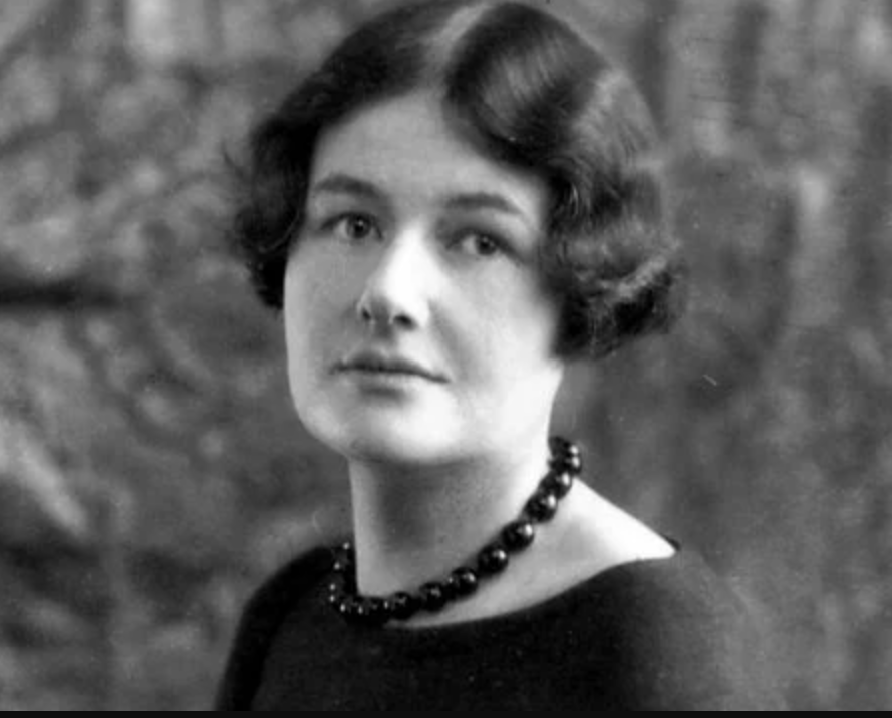
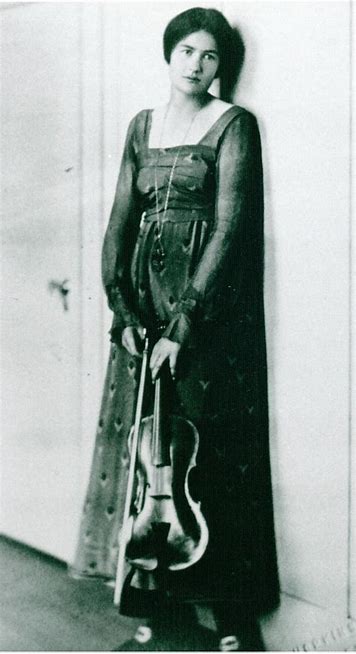
Born and raised in England, with a German mother and an American father, Clarke spent much of her adulthood in the United States and she claimed both English and American nationality. Her late-Victorian childhood and, in particular, her father’s cruelty, are described in her memoir written in 1969-73. But it is also clear that her family was artistically inclined and her musical studies were encouraged. Clarke enrolled at the RAM in 1903, where she studied the violin. She was abruptly withdrawn from the institution in 1905, when her harmony teacher, Percy Miles, proposed marriage. In 1907 she began a composition course at the RCM, where she was Stanford’s first female student. Again, she was unable to finish her studies, as her father suddenly banished her from the family home.
To support herself, Clarke embarked on an active performing career as a violist, and in 1912 she became one of the first female musicians in a fully professional (and formerly male) ensemble, when Henry Wood admitted her to the Queen’s Hall orchestra. In 1916 she began a US residency that included extensive travel, concertizing and visits with her two brothers. With cellist May Mukle, she performed extensively in Hawaii in 1918-1919 and on a round-the-world tour of the British colonies in 1923.
During these years Clarke achieved fame as a composer with her Viola Sonata (1919) and Piano Trio (1921), both runners up in competitions that were part of the Berkshire (Mass.) Festival of Chamber Music, sponsored by the American patron Elizabeth Sprague Coolidge. Coolidge commissioned the Rhapsody for Cello and Piano in 1923, making Clarke the only woman composer the famous Maecenas supported.
Clarke settled in London in 1924, where she performed as a soloist and ensemble player with musicians including Myra Hess, Adila Fachiri, André Mangeot, Gordon Bryan, Adolphe Hallis, Guilhermina Suggia and Mukle. In 1927 the English Ensemble was formed, a piano quartet made up of Clarke, Marjorie Hayward, Kathleen Long and Mukle. Clarke also performed as a soloist and ensemble musician in BBC broadcasts, and made several recordings. The quantity of her compositional output decreased in the late 1920s and 30s, possibly because of the discouragement she faced as a composer.
With the onset of World War II, Clarke found herself in the USA, where she lived alternately with her two brothers and their families. During this period she returned to composing. Her productivity ended, however, when she accepted a position as a nanny in 1942. In a note preserved in a scrapbook of the 1942 ISCM conference (Berkeley, CA), Clarke describes the Prelude, Allegro and Pastorale she had written for the festival, and also mentions her modest circumstances of employment. She was particularly proud that her work was included, as she was one of only three British composers represented and, as she and others noted, the only woman. In the early 1940s Clarke became reacquainted with James Friskin, a member of the piano department at the Juilliard School, whom she had first known as a student at the RCM; the couple married in 1944. Her last compositional projects include God Made a Tree (1954), an arrangement of her song Down by the Salley Gardens and, around her 90th birthday, revisions of earlier scores, including Cortège and The Tiger.
 UP CLOSE AND CLASSICAL
Leave a comment